MRI Pulse Counter
A simple Arduino solution interfacing the output from the MRI to the study equipment.
My father does research for the department of behavioural neurosciences at McMaster, and many of his studies use fMRI. The MRI at St Joseph’s Healthcare sends a pulse down a long BNC cable to the control room every time it completes a ‘slice’ of a scan. The pulses arrive very quickly, and handling them all is a lot for the computer that is presenting stimuli and collecting data while keeping the fast response times an accurate study needs. To synchronize the experiment, the computer only needs to know when a full ‘volume’ of the brain has been scanned, which happens after a variable number of slices, usually 30 to 40 depending on the detail setting.
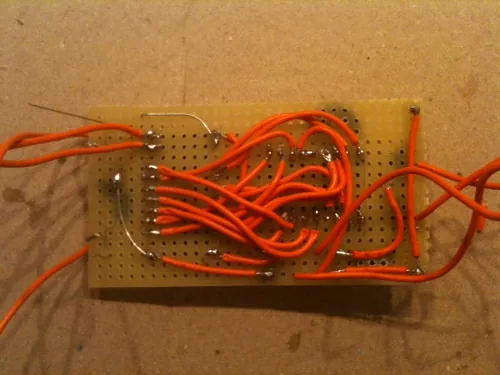
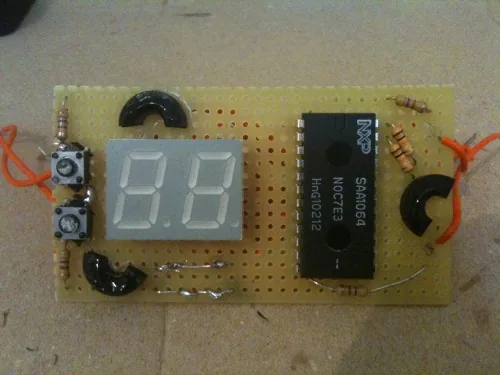
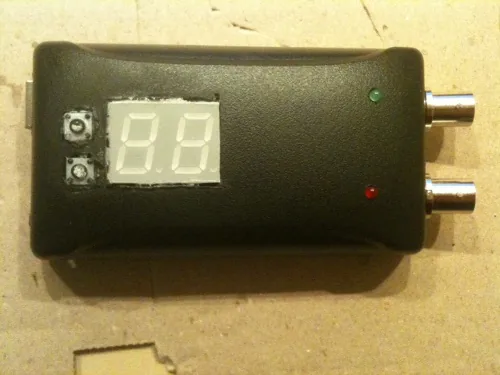
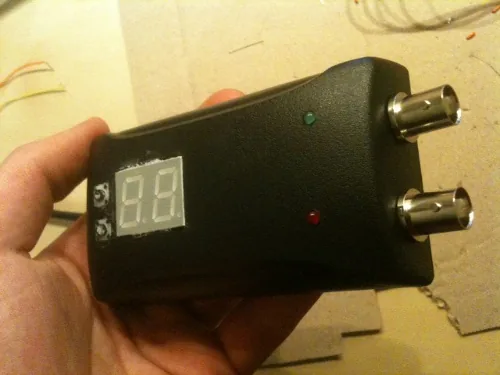
This device counts a set number of pulses and then signals the software once a full volume has been scanned, so the computer can keep up with the study. An Arduino Uno is the microcontroller, and an SAA1064 IC drives a two-digit seven-segment display showing how many input pulses will be received before a pulse is sent to the output. Two pushbuttons change that number, and two LEDs flash to show each input pulse and each output pulse.
Pictures